Need any help or advice? +44 (0)1782 454499

PRODUCTS USED IN THIS PROJECT
Although not necessarily an exhaustive list, the following tools and materials, supplied by Easy Composites, were used in this project.
The quantity shown below is the approximate amount used in the project rounded up to the nearest available kit size or quantity.
COMPONENT MATERIALS
MATERIALS & CONSUMABLES
-100g.jpg)


CUSTOMER GALLERY
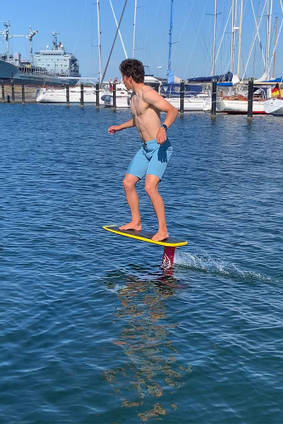
Pump Foil Board
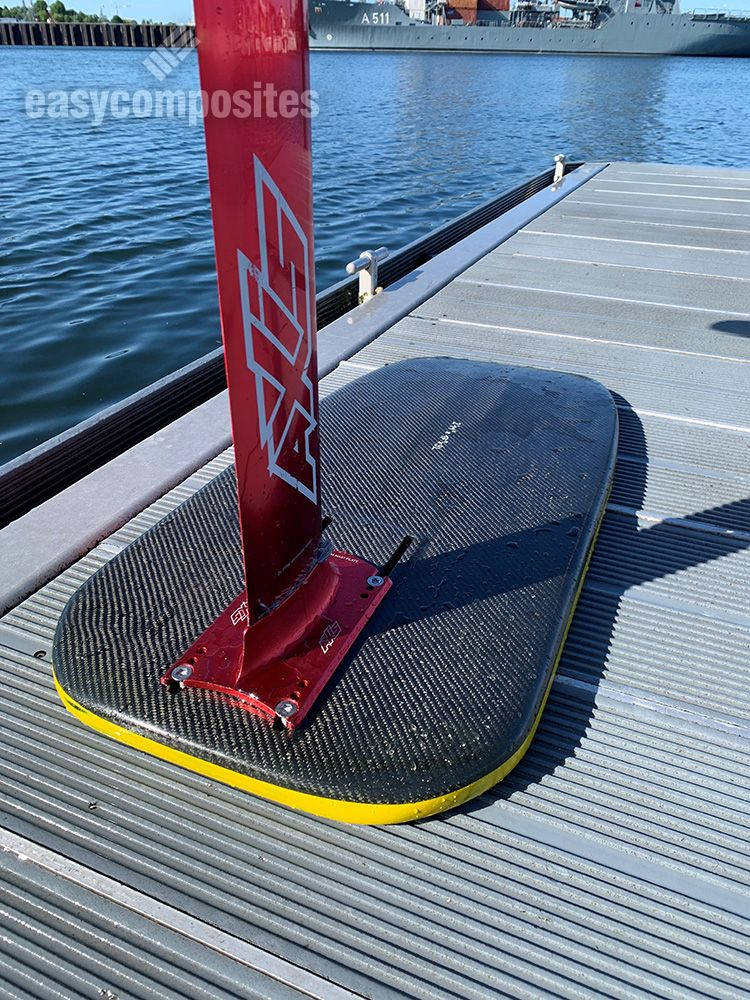
My latest project is a pump foil board with a volume of 9 litres, which is just enough to swim comfortably back to the dock if needed. The board is 89 cm long and 43 cm wide. The extra width helps with carving the setup and makes it easier to roll the board back under my feet.
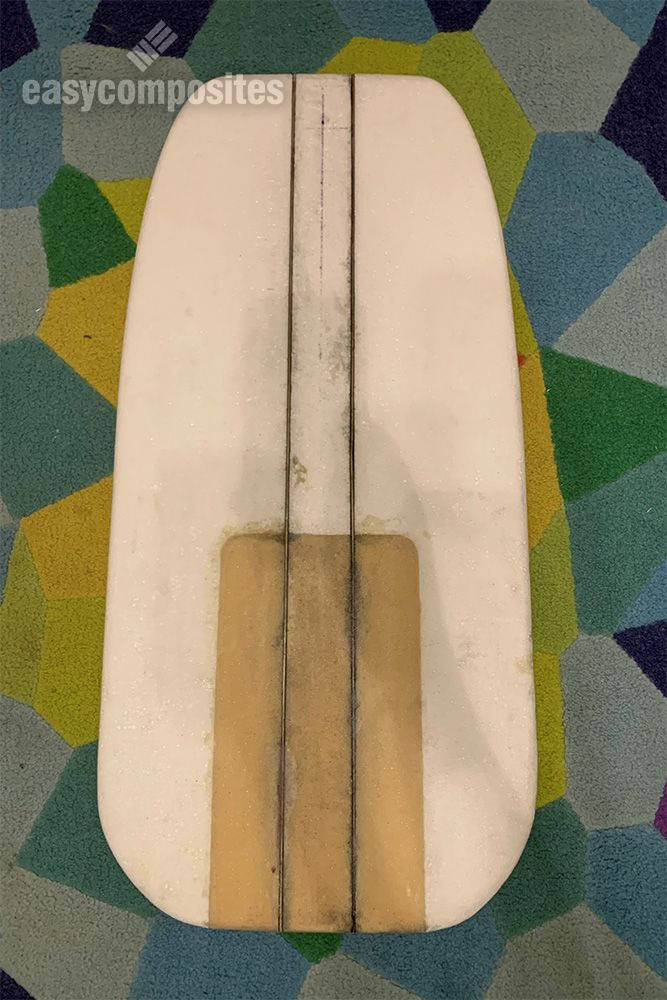
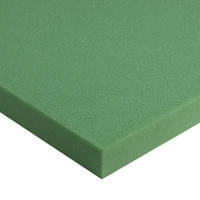
The core is made from EPS foam, with PVC foam reinforcement around the foil boxes. I shaped the core using a hot wire cutter and wooden templates. To improve stiffness and create a direct load path from the deck to the foil boxes, I added two carbon/balsa/carbon sandwich stringers. The bottom was thinned towards the front as the bending moment reduces to create a smooth rocker - this helps the board release from the water more easily.
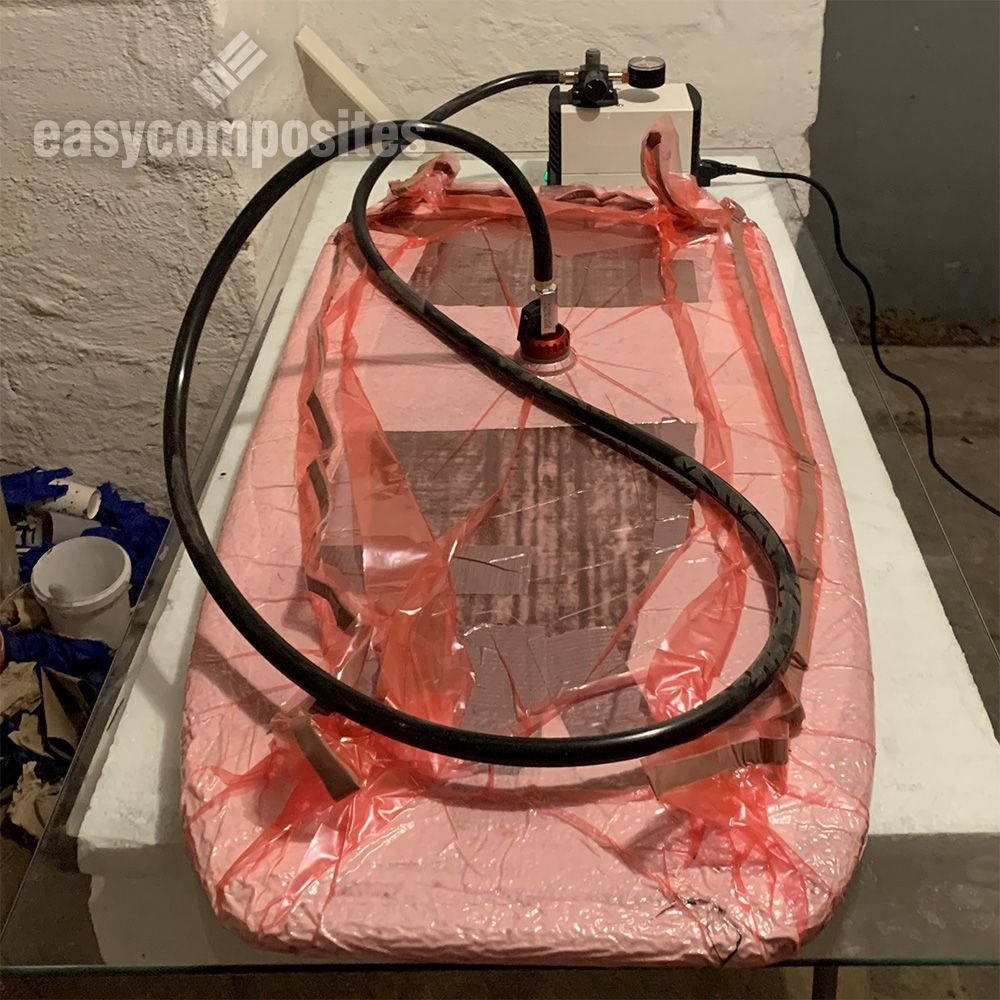
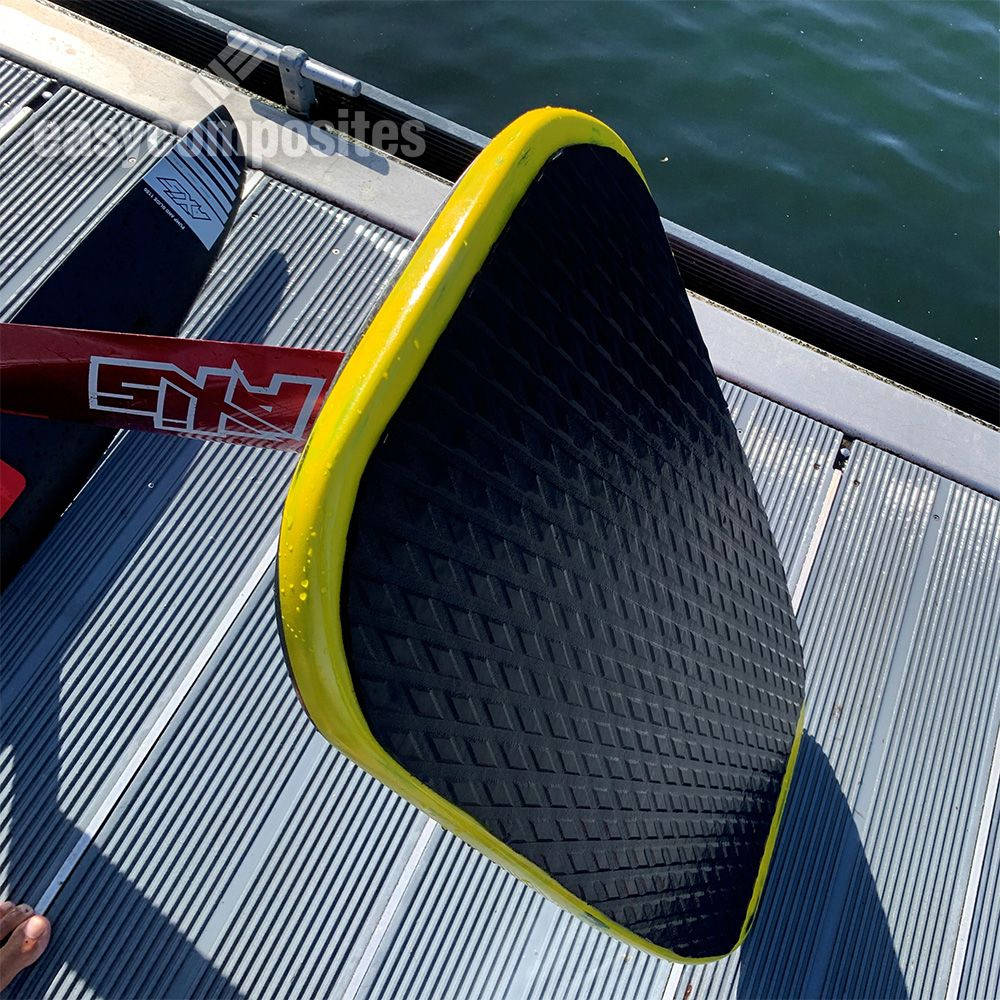
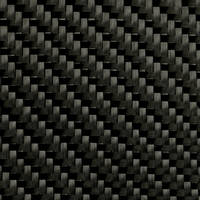
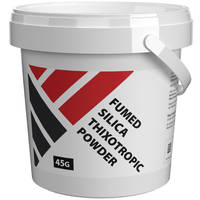
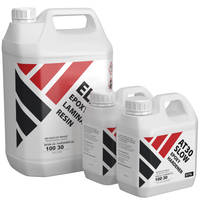
The laminate consists of two layers of 210 g 2x2 twill 3K ProFinish carbon fibre, vacuum bagged on the top and bottom. Around the foil boxes, I added 300 g biaxial carbon reinforcement to better handle the loads from the hydrofoil mount. For the finish, I used XCR Epoxy Coating Resin on the bottom, which gave it a clean carbon look. The top was filled with a mixture of silica and micro balloons and then painted yellow. Finally, I applied a 2K clear coat over the whole board and added an EVA deck pad for grip. The final weight of the board is 2 kg.
For my next pump foil board, I would use a full PVC core instead of an EPS core with local reinforcements. This would allow me to use higher vacuum pressure and would reduce small surface imperfections and resin-rich areas in the laminate. As a result, less filler would be needed.
Another advantage of a full PVC core is that it does not absorb water in the same way as EPS if the board gets damaged. It is also much more rigid, which means I could potentially reduce the number of laminate layers on the deck without risking cracks from foot pressure.
I would also consider removing the adjustable foil boxes and using fixed mounting holes instead. Now that I know the correct foil position for this board, adjustability is no longer necessary and a simpler construction would save weight and time.
ABOUT LENNY FRIEMEL
CONTACT INFORMATION
| @friemelenny |
DISCUSSION (0)
Please share any questions or comments you may have about this video tutorial.
LEAVE A COMMENT OR QUESTION
PRODUCTS USED IN THIS PROJECT
Although not necessarily an exhaustive list, the following tools and materials, supplied by Easy Composites, were used in this project.
The quantity shown below is the approximate amount used in the project rounded up to the nearest available kit size or quantity.
COMPONENT MATERIALS
MATERIALS & CONSUMABLES
ABOUT LENNY FRIEMEL
CONTACT INFORMATION
| @friemelenny |
DISCUSSION (0)
Please share any questions or comments you may have about this video tutorial.
LEAVE A COMMENT OR QUESTION
100% SECURE


PAYMENT METHODS






Easy Composites Ltd, registered in England 7486797. All content copyright (C) Easy Composites Ltd, 2025. All rights reserved.